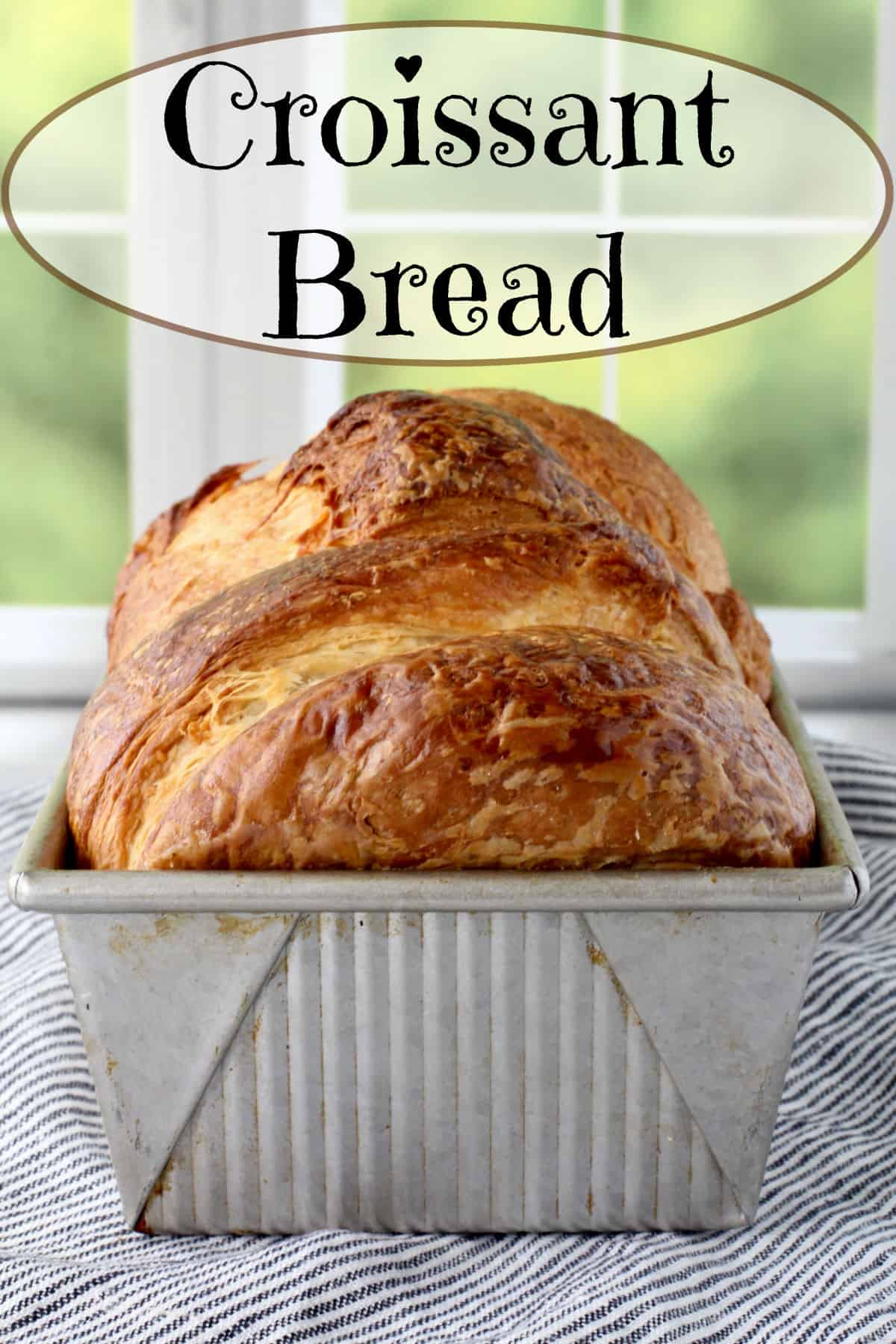
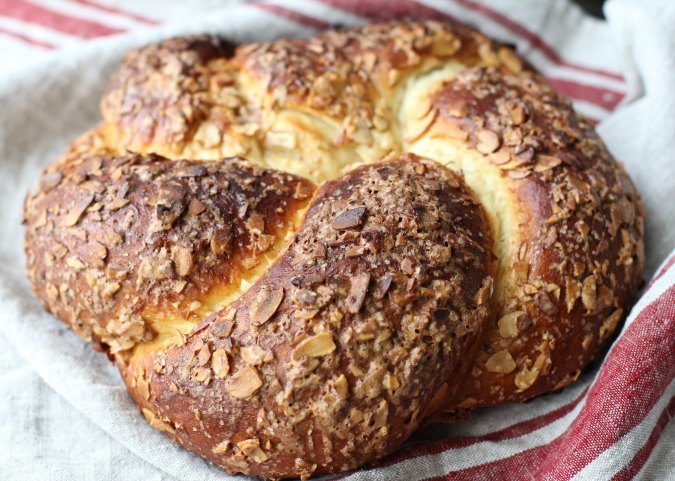
This water proofed bread is enriched with eggs, milk, and sugar, and tastes amazing slathered in jam.
It's kind of a cross between brioche and challah, and the wild card is the amount of yeast that the recipe calls for. A lot. And the water-proofing (which means proofing in water, not making the bread safe for taking out in the rain).
This month the Bread Baking Babes are baking a bread chosen by
Elle of Feeding My Enthusiasms. I am baking along as a Buddy.
This recipe is from the 1973 edition of the book Beard on Bread by James Beard.
The dough is proofed by wrapping it in a tea towel and plunging it in a bowl of warm water and waiting for it to rise.
 |
| The dough when it is first submerged into the water. |
 |
| The dough after it has risen to the top of the water bath. |
I'm pretty sure that doing the bulk rise the traditional way would have worked out just fine, but trying this method was a lot of fun. The rising time was definitely fast, only 30 minutes.
There was a lot of discussion among the Babes about the amount of yeast called for in this recipe, and a lot of the Babes cut back. Back in the day, bread recipes called for much more yeast than we use today. In the end, I wanted to stay true to the original recipe quantities, just to see what would happen.
I am still amazed that only 3 1/2 C of flour produced two loaves of bread. I definitely had my doubts. The dough was very wet and difficult to shape, and seemed like it would barely fill the loaf pans. Oven spring is an amazing thing.
If you use the two packets of yeast called for in the recipe, pay close attention to the dough so you don't over proof it.
In the end, the bread is wonderful. I took a loaf to work with a jar of homemade blackberry jam and it disappeared.
Water-Proofed Bread
Ingredients
2 packages of active dry yeast
1/2 C warm (100 to 115 degrees F) water
1 tsp sugar
1/2 C milk
1 stick (1/2 C) unsalted butter
2 tsp salt
3 eggs
3 1/2 C bread flour, plus more for flouring the tea towel
Instructions
- Place the yeast in the bowl of a stand mixer, pour in the water and sugar, and stir. Let sit for 5 minutes.
- Place the mild and butter into a heat proof bowl and microwave until the butter has just melted.
- Add the milk and butter mixture to the yeast and stir. Stir in the salt.
- Add the eggs and whisk.
- Add the flour and knead with the dough hook for about 5 minutes.
- Generously flour a tea towel and scrape the dough onto it. Loosely wrap the dough with the flour and tie it with string.
- Fill a large bowl with 115 degree water and plunge the package of dough into the water.
- Watch closely for the packet to rise to the top of the water (about 30 minutes). Remove the packet from the water, drain, and scrape the dough out onto a lightly floured work surface. Divide the dough in half and shape as best as you can into two loaves. Place the dough into two oiled 8 1/2 by 4 inch loaf pans and cover with plastic wrap.
- Preheat the oven to 375 degrees F. Allow the dough to rise until doubled, about 30 minutes.
- Brush the loaves with water and bake for about 30 minutes, until the dough reaches an internal temperature of about 190 to 200 degrees F.
- Remove the loaves from the pans onto a wire rack and cool on their sides. After about 10 minutes, flip the loaves to the other side for another 10 minutes. At this point, you can either slice and serve, or wrap it up for later.
This bread will stay fresh for about a day. After the first day, it makes great toast or French toast. It also will freeze well for later.